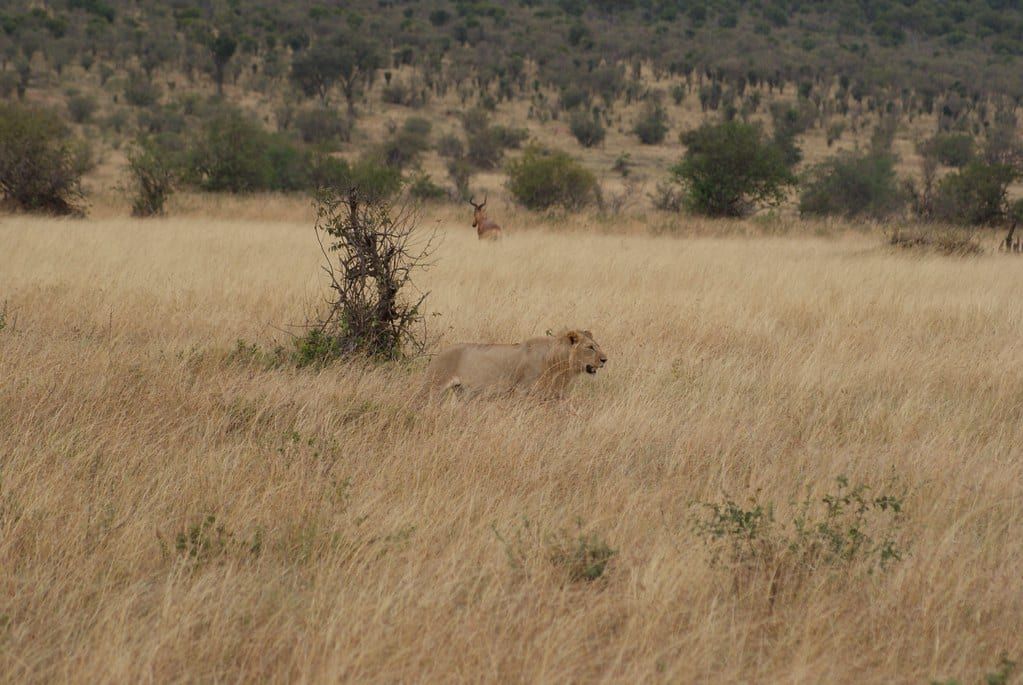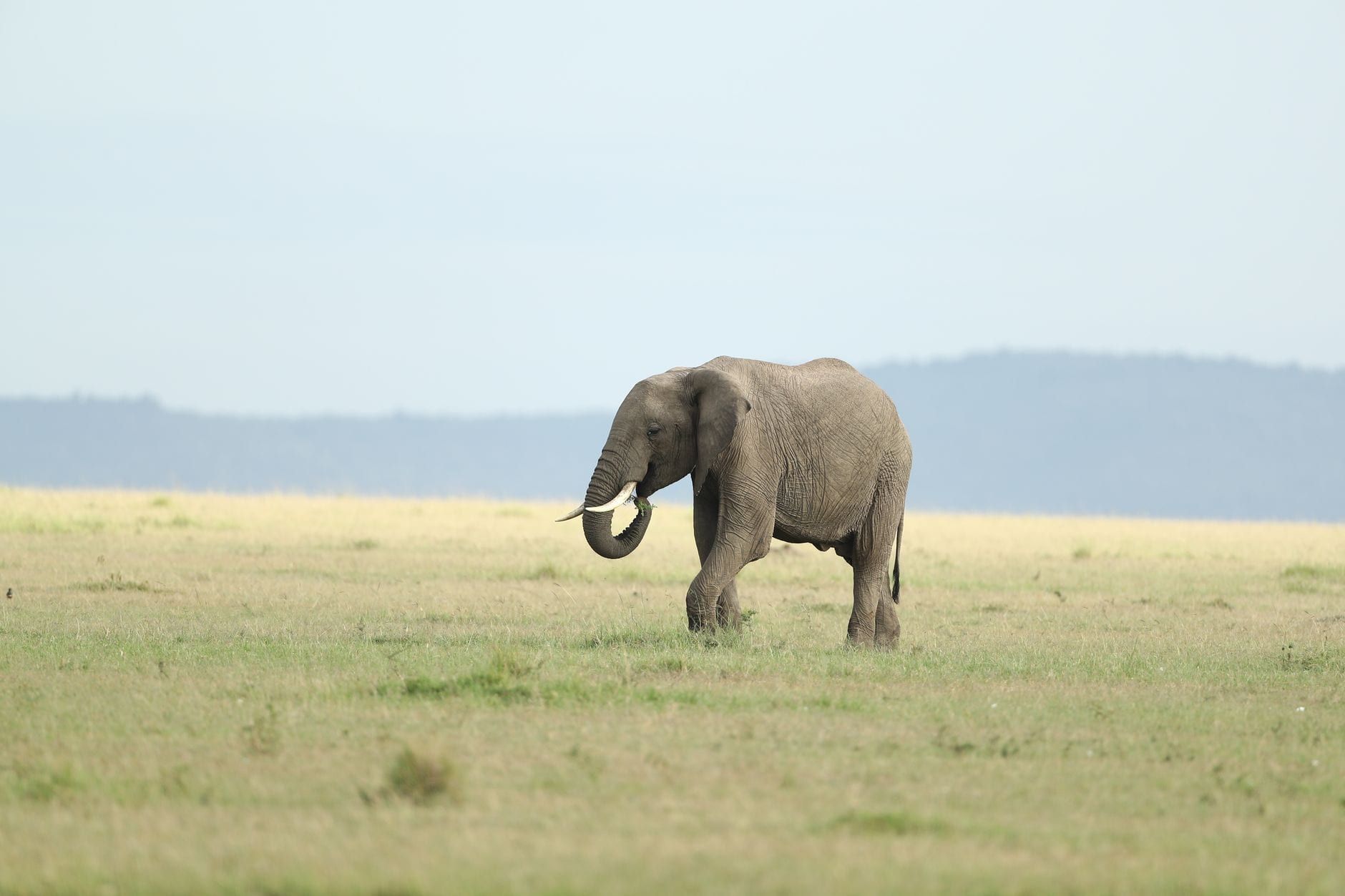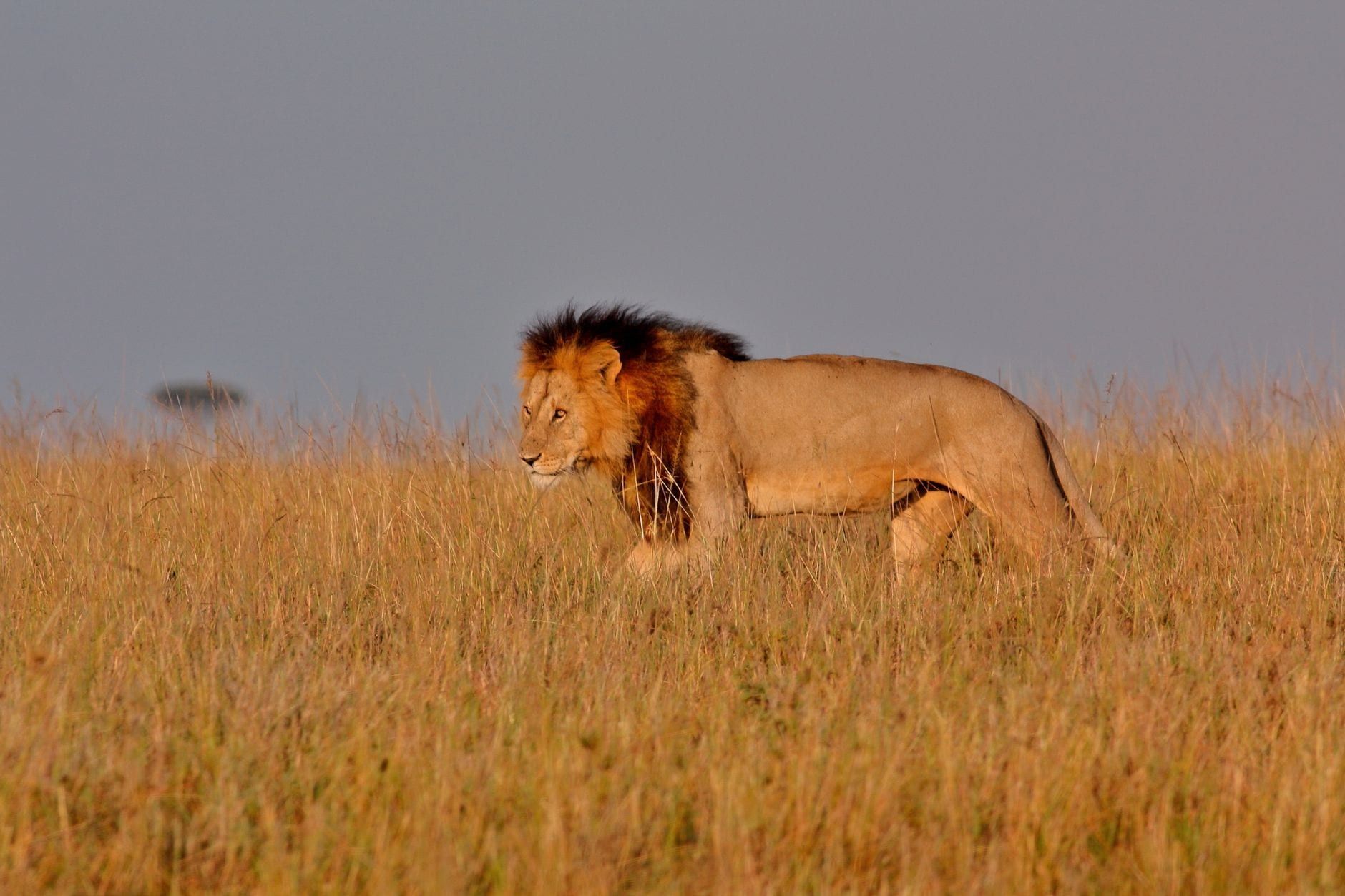
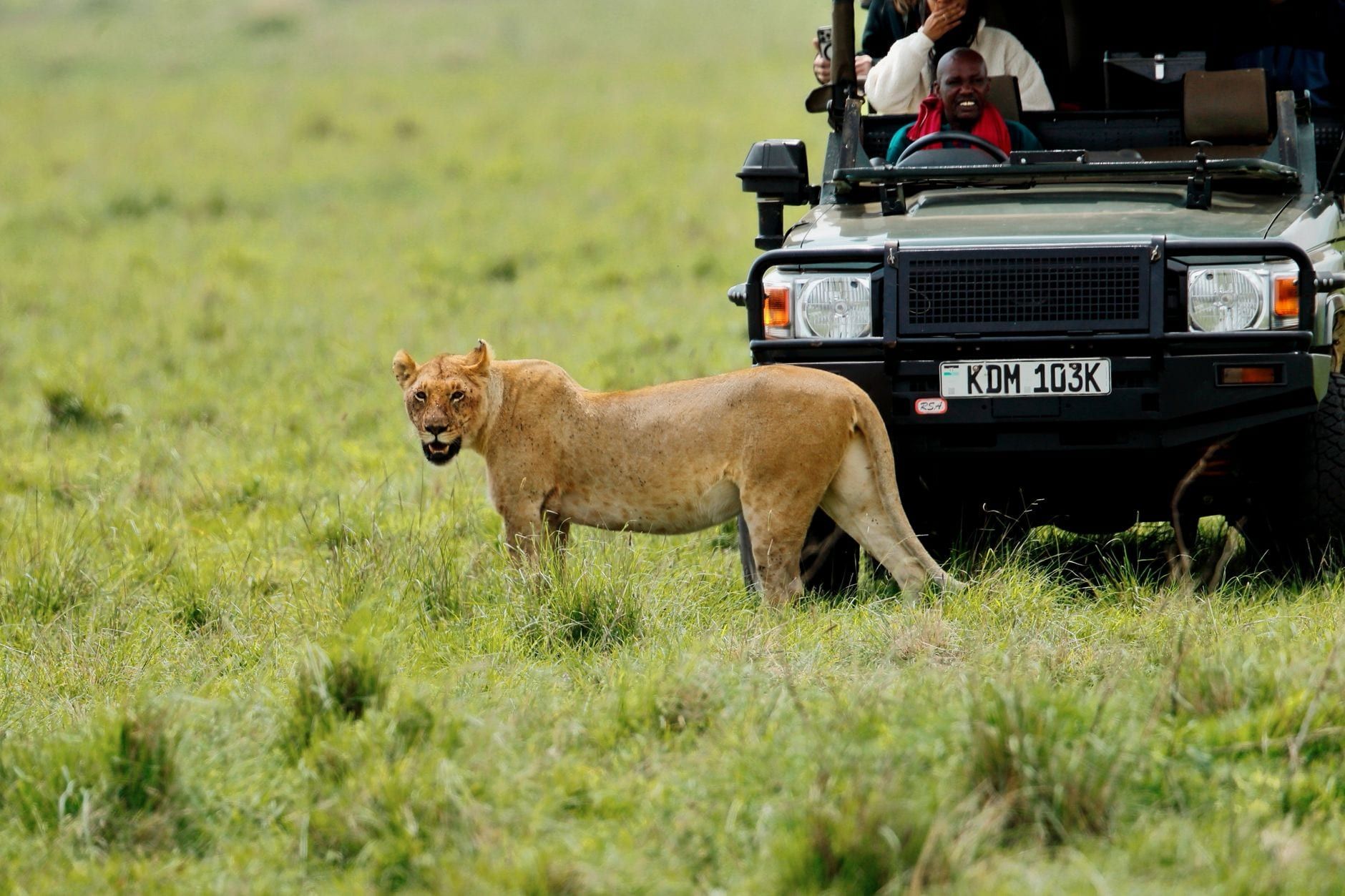
Three days is the standard Masai Mara trip length for a reason: two nights in the reserve gives you up to four game drives, and the Mara's wildlife density is high enough that even a short visit usually delivers lions, elephants and buffalo without much luck involved. The catch is the journey. Nairobi is 225-275 km away, and the road transfer eats 5.5-6.5 hours in each direction, so a 3-day trip is really a 2-night trip with driving on either end.
This guide walks through the day-by-day plan, what each tier actually costs, the park-fee rules that catch people out (the 12-hour ticket is the one to know), and when to go — plus 3-day Masai Mara tours worth comparing if you'd rather not assemble the pieces yourself.
Is a 3-Day Masai Mara Safari Worth It?
Yes — if your days are limited by time or budget, three days is a sound choice, and most visitors rate the Mara's wildlife above what they expected. The reserve covers 1,510 km² of savannah contiguous with the Serengeti, holds close to 90 mammal species, and has one of Africa's highest lion concentrations. Short trip, real payoff.
Be honest about the arithmetic, though. Pickup around 8am in Nairobi means you reach camp in the early afternoon of Day 1, and Day 3 ends with a long drive back. Two of your three days are half consumed by transport. Operators commonly recommend four days or more if the Mara is your only destination; three works best when the Mara is one leg of a bigger Kenya or Tanzania route — pairing it with the Serengeti is a natural fit, and there are combined Mara-Serengeti safaris built exactly for that.
Who three days suits: travellers based in Nairobi, anyone on a short Kenya stopover, budget travellers joining a group vehicle, and people stitching the Mara into a longer East Africa itinerary. Who should extend: photographers, big-cat obsessives and anyone adding a conservancy stay — four to six days lets you split nights between the reserve and a private conservancy without rushing.
3-Day Masai Mara Safari Itinerary, Day by Day
This is the canonical road-safari shape nearly every Nairobi operator runs. Times flex with traffic and your camp's location, but the skeleton stays the same.
Day 1: Nairobi to the Mara, First Game Drive
Pickup is around 8am from the city centre or Westlands. The road is tarred the whole way to Sekenani Gate, running through Narok town, with a stop at a Great Rift Valley viewpoint on the descent — the one legitimately photogenic pause on an otherwise long drive. Plan on 5.5-6.5 hours door to gate, depending on which gate your camp uses.
You'll reach camp for a late lunch, then head straight out for an afternoon game drive. Gates close at 6pm, so this first drive runs three to four hours — enough to meet the resident elephant and buffalo herds and, more often than not, a lion pride before sundown. Sleep comes early. Tomorrow starts in the dark.
Day 2: Full-Day Game Drive and the Mara River
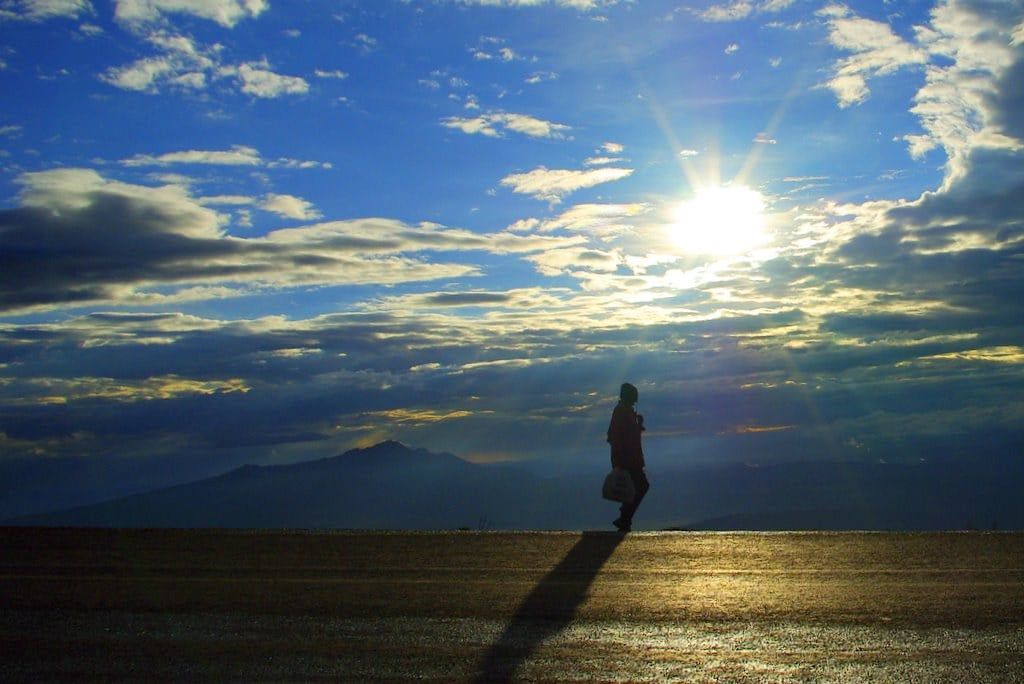
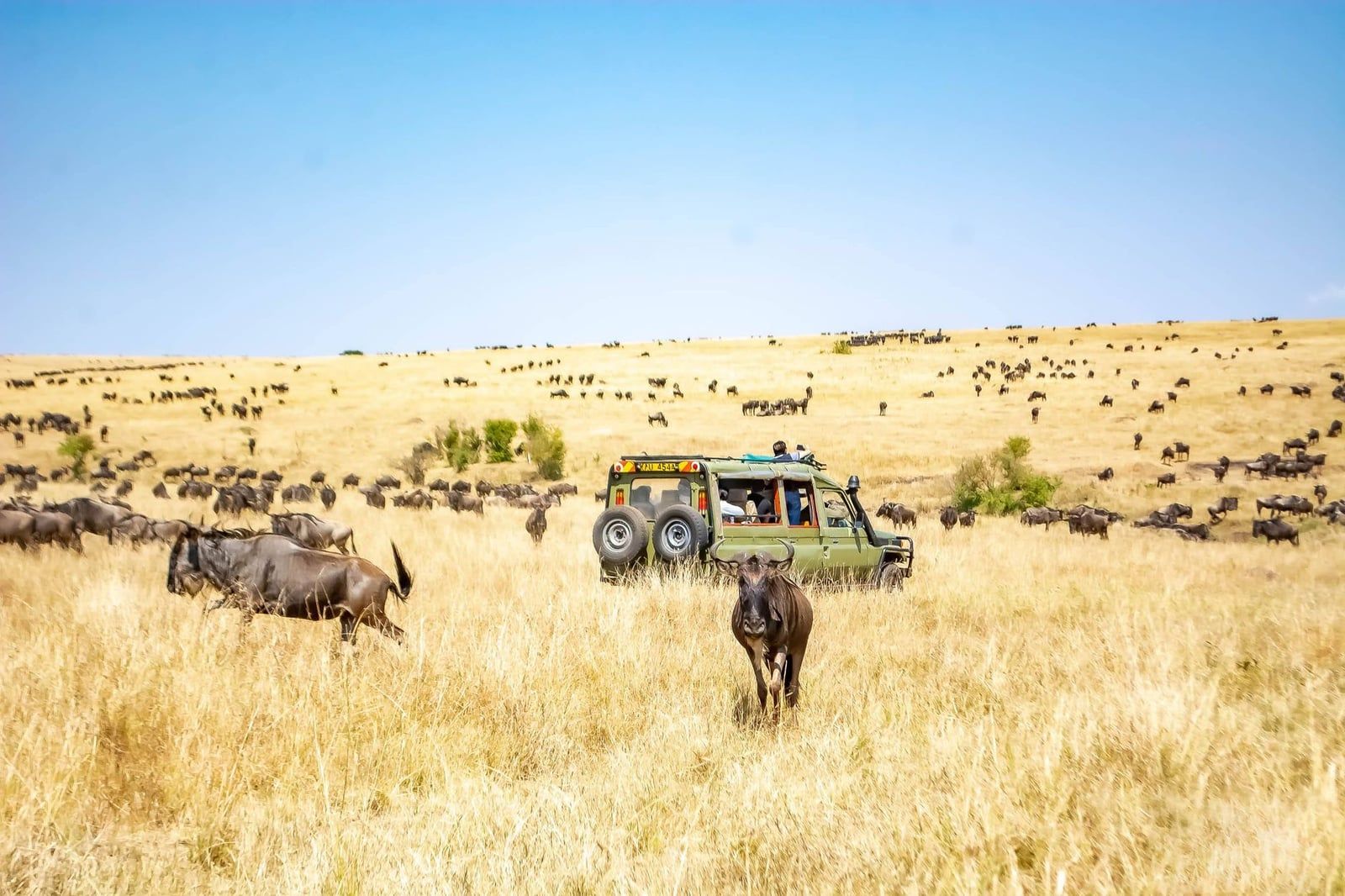
Day 2 is the reason you came. Gates open at 6am and predators are most active in the cool hours, so a pre-dawn start is standard. You take a packed lunch and stay out all day, working the open plains between the Talek and Mara rivers and pushing as far as the Mara River itself, where hippos and crocodiles hold station year-round.
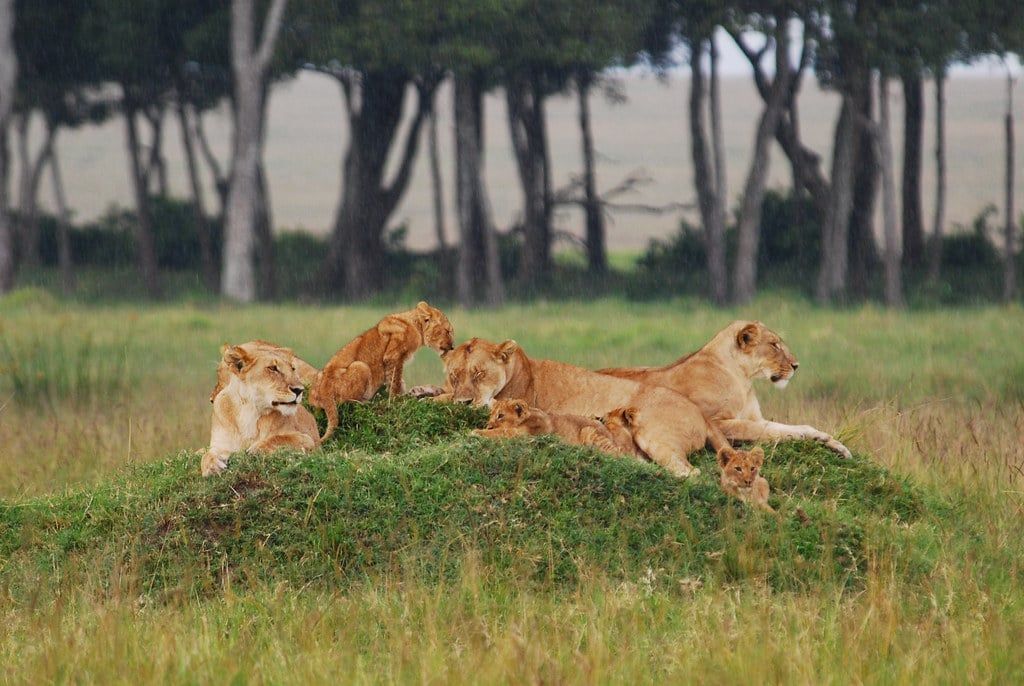
The Big Five is the target list. Lions are the Mara's specialty — the prides are heavily studied and local guides know individual families by name. Cheetah hunt the open grassland around Musiara and Sekenani, leopards shelter in acacia trees along the rivers, and elephants and buffalo move in resident herds you can almost set a watch by. Rhino is the honest wildcard; sightings happen but you shouldn't build the day around one. When more than five vehicles gather at a sighting, viewing is capped at 10 minutes and waiting vehicles keep 100 m back — your guide manages this, but it's why famous kills and crossings can feel staged.
The optional add-on for this day is a hot-air balloon flight: lift-off before sunrise, 1-1.5 hours drifting over the herds, then a champagne bush breakfast on landing. It costs roughly $450-600 per person, and in migration season you can watch wildebeest columns from the air. Book 1-2 days ahead and schedule it early in your stay — flights cancel in wind or heavy rain and operators typically retry the next morning. If a balloon is on your list, compare Masai Mara balloon safari tours before you commit to your operator's default.
Day 3: Final Drive, Maasai Village and the 10am Gate
One last short game drive at dawn, then back to camp for breakfast and packing. The timing that matters: if you're leaving by road, you need to clear the gate by about 10am, or you trigger another full day's park fee — $100 or $200 per adult depending on season. Flying out instead? Be at your airstrip by 10am under the same rule.
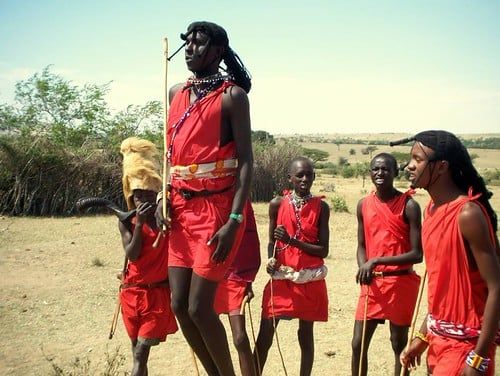
The popular add-on on the way out is a Maasai village visit near the gates, typically $30-50 per person including the community contribution. You'll see inside a homestead, hear traditional songs and the jumping dance, and see beadwork up close. Ask permission before photographing anyone — it's both courtesy and expected. From there it's the long road back, with arrival in Nairobi in the late afternoon or early evening.
What a 3-Day Masai Mara Safari Really Costs
Prices for what sounds like the same trip vary wildly between sources, so here is the honest version. A group-joining camping or simple-camp safari runs from roughly $300-500 per person; operators advertise "from $350" departures, and SafariBookings lists 302 three-day Mara tours from 144 operators with camping trips starting around $300. Mid-range trips with proper tented camps run $500-1,000. Luxury lodges push $1,000-2,000 and beyond, and some family-oriented operators quote $1,800-4,500 for top-end three days. Why the spread? Camp standard, inclusions, and whether park fees are inside the number.
| Tier | What you get | Price per person (3 days) |
|---|---|---|
| Budget / group-joining | Shared vehicle, basic tented camp or camping, full board | $300-500 |
| Mid-range | Private or small-group 4x4, comfortable tented camp | $500-1,000 |
| Luxury | Private guide, high-end lodge or camp | $1,000-2,000+ |
| Fly-in package | Flights from Wilson, lodge-based, camp game drives | from ~$1,500 |
Group size is the biggest lever after tier. A solo traveller booking private pays from about $600 per day; two people sharing a private vehicle drop that to roughly $350-540 per person per day. Group or shared tours run $200-300 per person per day, with fully organized group departures around $360-400 for the full three days — good value, but you're on the group's clock, not yours.
Most packages include accommodation, full-board meals, game drives, a driver-guide, park fees and Nairobi transfers. The usual exclusions: drinks, balloon flights, village visits, tips and travel insurance. Get the inclusions in writing before you pay. The extras add up fast — a village visit at $30-50, a balloon at $450-600, and return flights at roughly $150-250 each way. For families, note that children aged 9-17 pay $50/day in park fees (under-8s free), which softens the maths considerably; peak-season entry for a family of two adults and two older kids still runs to about $2,400 over three days.
Park Fees & the 12-Hour Ticket Rule
Fees are set by the Narok County Government, not the national wildlife service, and they run on a two-season calendar: US$100 per adult per day from 1 January to 30 June, and US$200 per adult per day from 1 July to 31 December. Children aged 9-17 pay US$50 year-round; under-8s enter free. Conservancies bordering the reserve charge their own US$80-120 daily fees.
The rule that catches people out: a ticket is valid for 12 hours, not 24 — the 6am to 6pm daylight window. Staying inside the reserve, you pay per night of your stay. Staying outside the gates, you pay per day you enter, and since entry now works on an upon-entry basis, leaving mid-day and returning means paying again. That's exactly why the full-day drive with a packed lunch on Day 2 is the standard pattern: one ticket, maximum hours.
Departure day is where the money leaks. Miss the 10am gate exit by road — or the 10am arrival at your airstrip if flying — and you owe another full day's fee. There's also a 2-hour transit ticket for guests transferring through the reserve to airstrips, which your operator handles if applicable. Payment: the Mara Triangle's gates (Oloololo and Purungat Bridge) are cashless only, taking Visa, Mastercard or M-Pesa; other gates accept US dollars or Kenyan shillings in cash, and you can pre-pay via the KAPS ticketing office in Nairobi's Upper Hill to skip the gate queue.
Two more rules shape your budget. Self-driving inside the reserve has been banned since June 2024, so the rental-car workaround is gone — you go with a registered operator or your camp's vehicles. And do the maths on fees versus package price: three tickets cost $300-600 per adult depending on season, which is why a "$350 all-in" group ad is almost certainly excluding entry fees. That's fine, as long as you know.
When to Go: Great Migration, Seasons & the Price Trade-Off
Your dates decide two things at once: what wildlife you see and what you pay. The fee calendar doubles in July, the herds arrive the same month, and the cheapest weeks of the year come with rain. Here's the year broken down.
July-October: The Migration
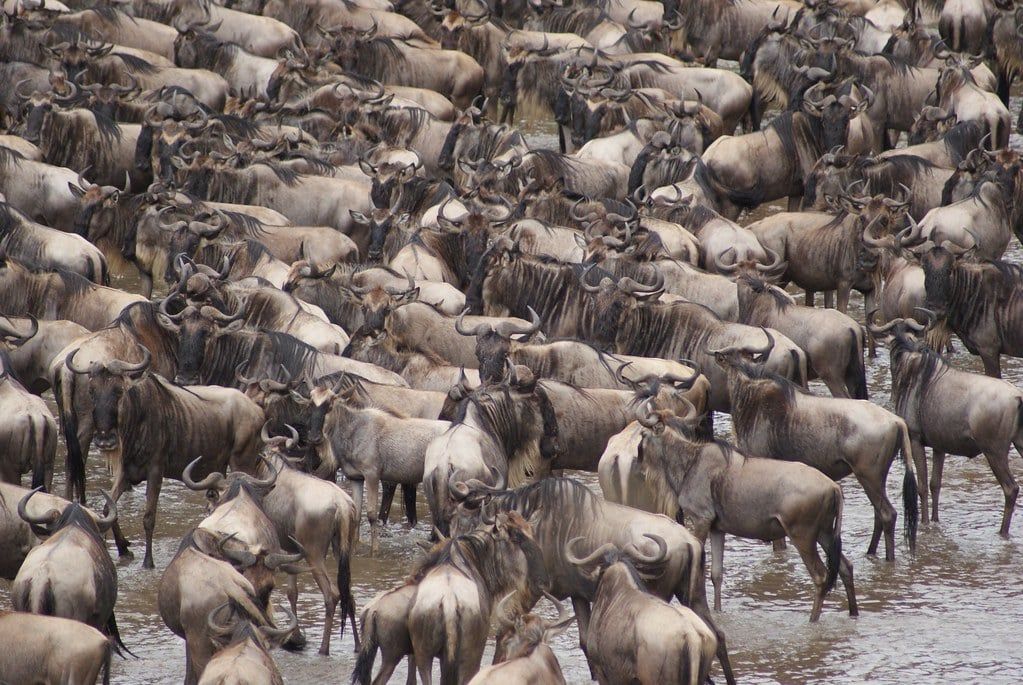
The Great Migration herds — roughly 1.3-1.5 million wildebeest plus 400,000 zebra and hundreds of thousands of gazelles on an 800 km annual circuit from the Serengeti — typically reach the Mara in mid-July and stay through October. Mara River crossings peak in August and September, when thousands of animals brave the current and the crocodiles at once. This is peak everything: $200/day fees, the highest visitor numbers, famous crossings drawing up to 200 vehicles, and camps filling months ahead. Book 6-12 months out. For crossing strategy in detail, read our guide to Great Migration river crossings and planning.
January-March: Calving at Low-Season Rates
The herds are back in Tanzania, but resident wildlife doesn't move. January to March is calving season, which pulls lions and other predators into heavy action on the plains, and you pay $100/day entry instead of $200. December to February is a genuinely good compromise: dry weather, thinner crowds, low-season fees, and big-cat viewing that barely dips.
April-May: The Cheapest Window
The long rains hit April and May. Rates drop to their lowest, camps go quiet, and the landscape turns green and lush — strong for birding and photography. The trade-off is real: murram road sections turn to mud, 4x4s become essential, light is poor, and some camps close entirely. November's short rains bring milder versions of the same. If you go green season, confirm your operator is running a proper 4x4, and check our month-by-month guide to visiting the Masai Mara before you pin dates.
Getting There: Road Transfer vs Flying Safari
On three days, transport isn't a footnote — it decides how much safari you actually get. Here's the trade laid out straight.
| Road safari | Flying safari | |
|---|---|---|
| Travel time | 5.5-6.5 hours each way, via Narok | 45-60 minutes from Wilson Airport |
| Cost | Included in packages from ~$350 | ~$150-250 per person each way |
| Game-drive hours on 3 days | Up to 4 drives, squeezed by transfers | More drives; full mornings on Days 1 and 3 |
| Best for | Budget and group travellers | Short trips where hours matter |
The road route is tarred all the way to Sekenani Gate and includes the Rift Valley viewpoint stop; shared-transport packages start around $350. Flying means a scheduled hop from Nairobi Wilson to airstrips like Olkiombo, Keekorok or Mara Serena, with departures around 07:00, 10:30 and 14:00 — note the strict 15 kg baggage limit in soft-sided bags only. Three-day fly-in packages start from about $1,500 per person.
The decision rule: flying buys back most of a full day of game drives on a 3-day itinerary, so it pays off when your time is worth more than the fare difference. If your budget stretches to it, fly in and drive out, or fly both ways. If you drive, pick a camp on the Talek side — it shortens both the transfer and the morning run to the gate. For departure logistics generally, see Masai Mara safaris from Nairobi.
Where to Stay: Inside the Reserve, Outside the Gates, or a Conservancy
On a short trip, your camp's location matters as much as its thread count. One base for both nights is the right call — unpacking twice in three days wastes game-drive hours.
Inside the Reserve
Camps inside the reserve put you first in line at dawn: no gate queue, no transit time, straight onto the cats. Expect to pay for the privilege — inside-camp rates sit in the mid-range band and up. If minimizing travel time is your stated goal, this is where your money goes furthest.
Outside the Gates
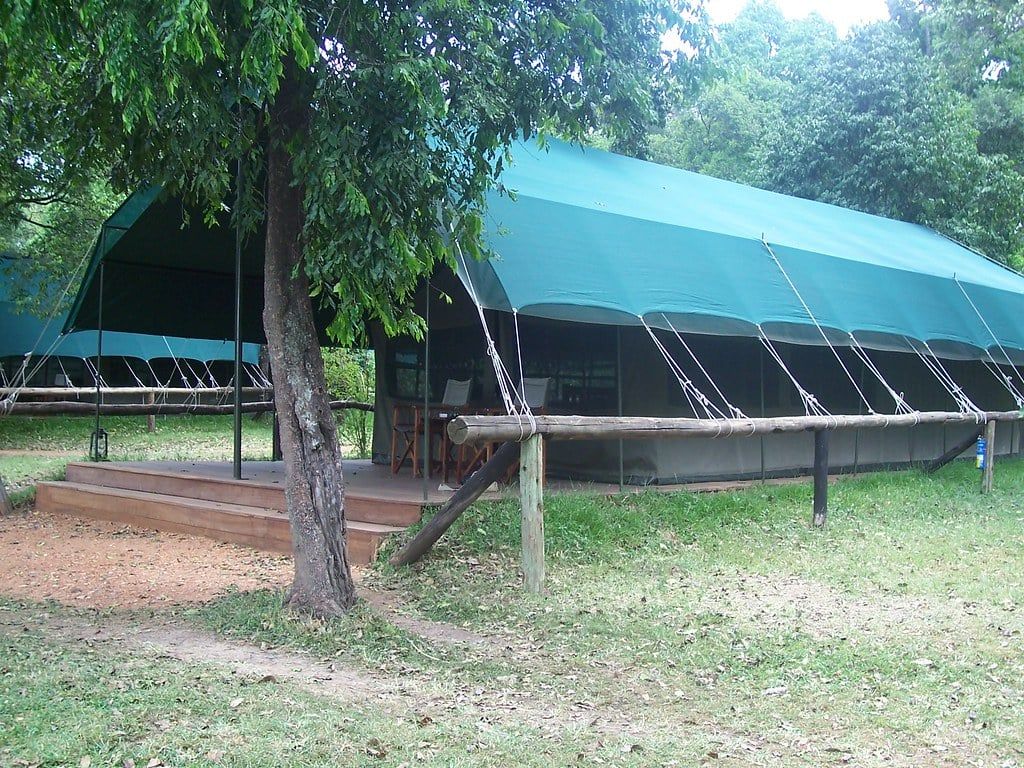
Budget tented camps near Sekenani, Talek and Oloolaimutiek run $60-100 per person per night, and mid-range options $150-300. The economics are simple: you pay park fees only for the days you actually enter. Talek is the pick of the three areas — it sits close to two gates with a good spread of mid-range and luxury camps. Budget names that come up consistently: Kambu Mara Camp, Greenwood Safari Camp and Ol Moran Tented Camp. Mid-range: Mara Explorers Camp, Mara Springs Safari Camp, Manyatta Camp.
In a Private Conservancy
Naboisho, Mara North and Olare Motorogi border the reserve and charge US$80-120 daily entry. What that buys: night drives, guided walking safaris and controlled off-road tracking — all forbidden inside the main reserve — with a fraction of the vehicle traffic. On three days, a conservancy night is a splurge rather than a strategy, but it's the right splurge if leopards and quiet sightings rank highest for you. Luxury names in and around the reserve: Porini Lion Camp, Sand River Masai Mara, Mara Bush House. For a deeper comparison, our guide to Masai Mara lodges and what they cost breaks the tiers down camp by camp.
How to Book: Private vs Group & the Questions to Ask
Group or private comes down to money and control. Group departures at $360-400 for three days suit solo travellers and tight budgets; you share the vehicle, the schedule and the sightings with strangers. Private trips cost more per day — from about $350-540 per person for two travellers, rising toward $600 if you're alone — but you set the pace, leave early when the cats are moving, and return when the kids melt down. Families should almost always take the private vehicle.
Book 3-6 months ahead for most dates and 6-12 months for July-September. Check the operator's licensing and reviews, and press for specifics on the vehicle — a proper 4x4 Land Cruiser beats a minivan on the Mara's tracks, especially in the rains — and on where your nights are actually spent. To compare options in one place, start with the full range of Masai Mara tours.
Ask every operator these questions before paying a deposit:
- Are park fees itemized per day and per traveller?
- Exactly which camp, and inside or outside the gates?
- Is the vehicle a 4x4 or a minivan?
- Are drinks, village visits and tips included?
- What are the cancellation and refund terms?
And treat a quote far below the tier table above as a red flag, not a bargain. The usual culprit is excluded park fees — $300-600 per adult across three days — or a camp an hour's drive from the gate. A cheap safari with three hours of daily transit isn't cheap.
Practical Tips: Packing, Health & Photography
Mornings in an open vehicle run 10-14°C before midday swings to 25-28°C, so layers beat any single outfit. The packing list that earns its space:
- Neutral khaki, olive or brown clothing in light layers
- Fleece and windbreaker for dawn drives; a beanie helps
- High-SPF sunscreen, hat and insect repellent — pricey at camps
- Binoculars, one per person if you can
- Camera plus spare batteries and memory cards
- Headlamp, wet wipes and closed walking shoes
A Maasai shuka — the checked wool blanket — is the local multi-tool: warmth on dawn drives, dust cover on the move, pillow on the way home. Buy one in Nairobi or at a village visit. On health: the Mara is a malaria zone year-round, so talk to a travel clinic 4-6 weeks before departure about prophylaxis, use repellent at dawn and dusk, drink bottled or purified water, and carry comprehensive travel insurance that covers the road transfer and any balloon flight.
For photography, work the golden hours either side of 6am and 6pm, when the light is low and the predators are moving. Bring a bean bag to steady a long lens on the vehicle's window frame, and more memory cards than you think you need — a river crossing burns through storage fast. Personal photography from vehicles is unrestricted, but drones are prohibited outright without written permission from reserve management and the Kenya Civil Aviation Authority, and unauthorized flying risks confiscation, fines or worse. Keep respectful distances from hunts and crossings; animal harassment carries an on-the-spot KES 10,000 fine, and your guide's licence depends on following the rules.
Frequently asked questions
Is 3 days enough for a Masai Mara safari?
For a Mara-focused trip, yes — a 3-day/2-night road safari fits up to four game drives, and the reserve's wildlife density means most visitors see far more than expected. But with 5.5-6.5 hours of driving each way from Nairobi, operators generally recommend four days or more if the Mara is your only destination.
How much does a 3-day Masai Mara safari cost?
Budget group-joining tours run $300-500 per person, mid-range trips $500-1,000, and luxury $1,000-2,000 or more; fly-in packages start around $1,500. Private trips cost roughly $350-540 per person per day for two travellers, versus $200-300 on shared tours. Park fees of $100-200 per adult per day are the biggest variable line — check whether they're included.
What is the 12-hour rule in the Masai Mara?
Entry tickets are valid for 12 hours — the 6am to 6pm daylight window — not a full 24. Departing by road after about 10am on your final day, or missing your airstrip by 10am, triggers another full day's fee. A 2-hour transit ticket exists for guests transferring to airstrips.
When is the Great Migration in the Masai Mara?
The herds typically arrive in mid-July and stay through October, with Mara River crossings peaking in August and September. Around 1.3-1.5 million wildebeest plus hundreds of thousands of zebra and gazelles make the 800 km annual trek from the Serengeti — exact timing shifts with the rains, so book 6-12 months ahead for this window.
Is it cheaper to drive or fly to the Masai Mara?
Driving is far cheaper — road packages with shared transport start around $350-400 — but the transfer takes 5.5-6.5 hours each way. The 45-60 minute flight from Nairobi Wilson costs roughly $150-250 per person each way, and 3-day fly-in packages start around $1,500 per person.
Can you self-drive in the Masai Mara?
No. Self-driving inside the reserve has been banned since June 2024, so game drives are only possible in registered operator vehicles or your camp's own vehicles.
Are park fees included in the safari price?
Most full packages include them, but always ask for the fees itemized by day and traveller — advertised low prices often exclude the $100-200 daily entry, plus balloon flights ($450-600), village visits ($30-50), drinks and tips. Get the inclusions in writing before paying a deposit.