About All ToursSerengeti Safari ToursFrom Nairobi ToursSafari ToursMigration Safari ToursJeep Tours3 Day ToursLuxury ToursHot Air Balloon Tours Directions Hours & Fees Guides
Find Tours 
Compare 10 Masai Mara tours from Nairobi, ranging from 10-hour day trips to 6-day multi-park safaris, with prices from $195 per person. Most tours include hotel pickup, game drives in 4x4 vehicles, and free cancellation up to 24 hours before departure.
 Free Cancellation
3-day small-group 4x4 Land Cruiser safari from Nairobi with guaranteed daily departures, max 7 people.
 Free Cancellation
Three-day Nairobi round-trip safari by 4x4 Land Cruiser, with a full day inside the reserve and a Maasai village option.
 Free Cancellation
4-day small-group jeep safari from Nairobi covering Masai Mara and Lake Nakuru, with park fees and meals included.
 Free Cancellation
A 12-hour, 4:00 am round trip from Nairobi to Maasai Mara in a private 4x4 Landcruiser with a game drive.

6-day shared-van safari covering Masai Mara, Lake Nakuru, Lake Naivasha and Amboseli, with guide and full board.
 Free Cancellation
15-hour Nairobi day trip to Maasai Mara with a Maasai guide, game drive in an open 4x4, and optional village visit.

3-day safari with game drives and village visits among the Masai living inside the reserve.
 Free Cancellation
Two-day private safari from Nairobi with door-to-door home or apartment pickup and all meals included.
 Free Cancellation
3-day Nairobi-to-Masai Mara safari with game drives, all meals, and entrance fees included.
 Free Cancellation
10-hour day trip from Nairobi to Maasai Mara with 5am hotel pickup, game drives, and English guide.
Read what travelers share about their experience visiting Masai Mara — from practical tips to personal highlights.
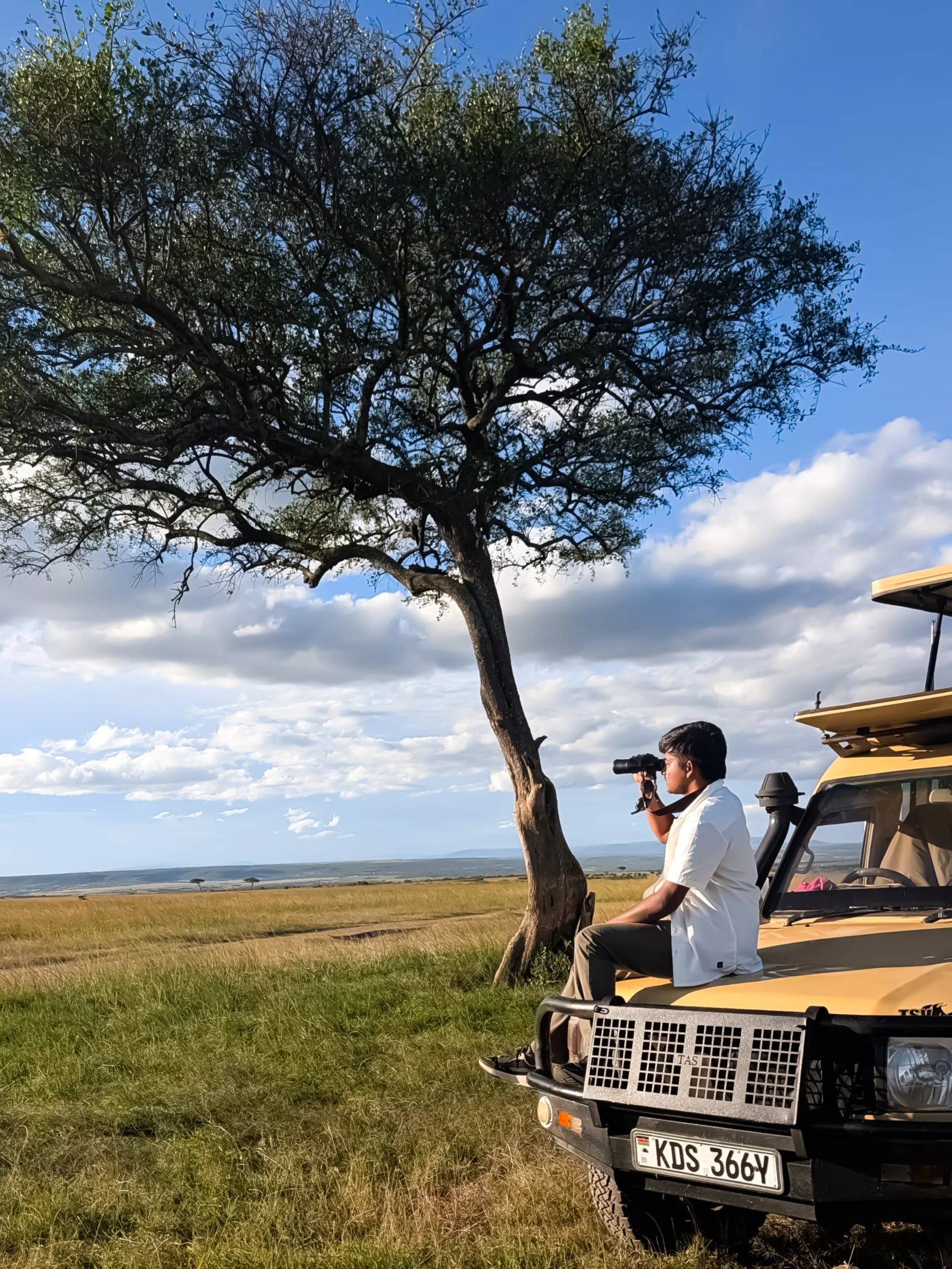
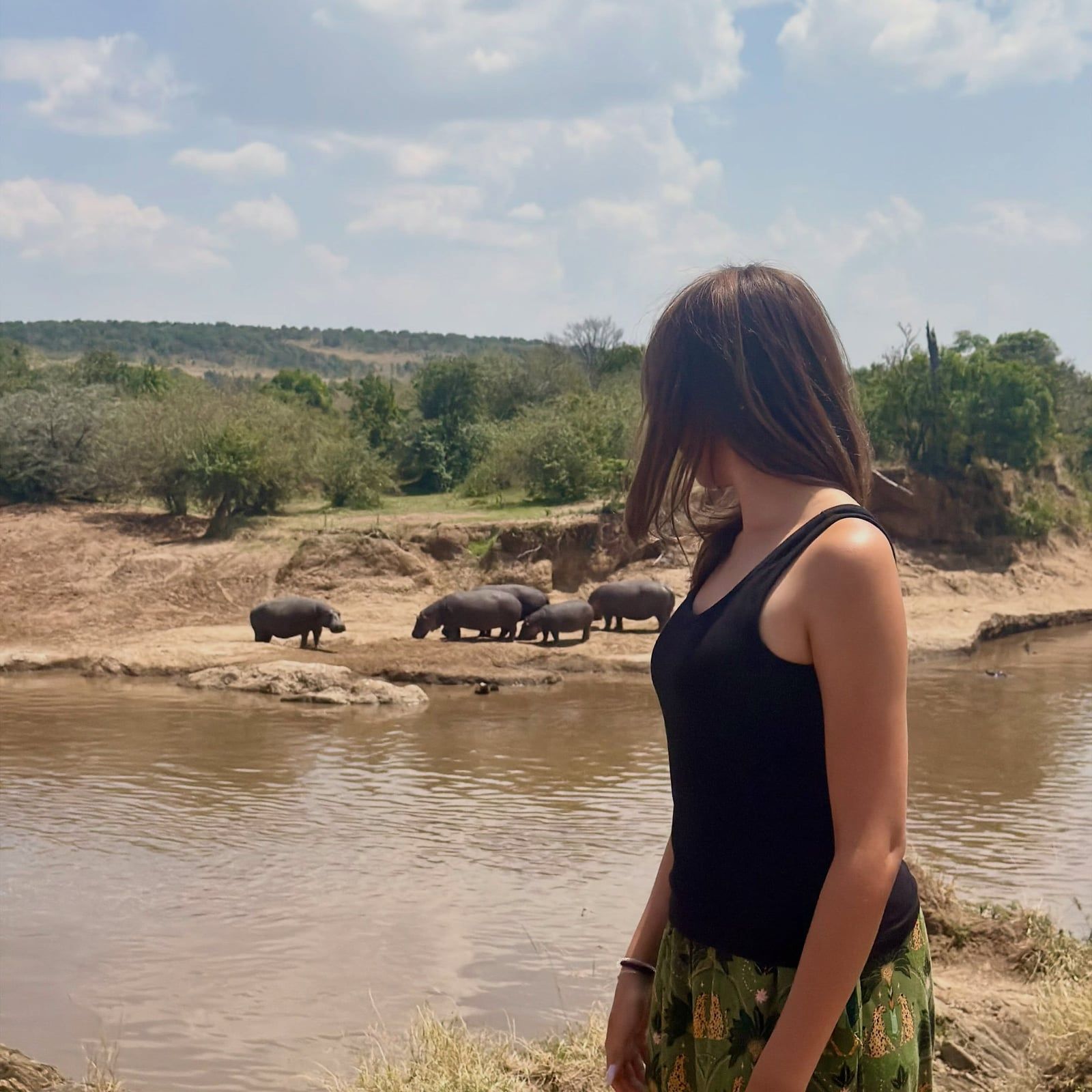
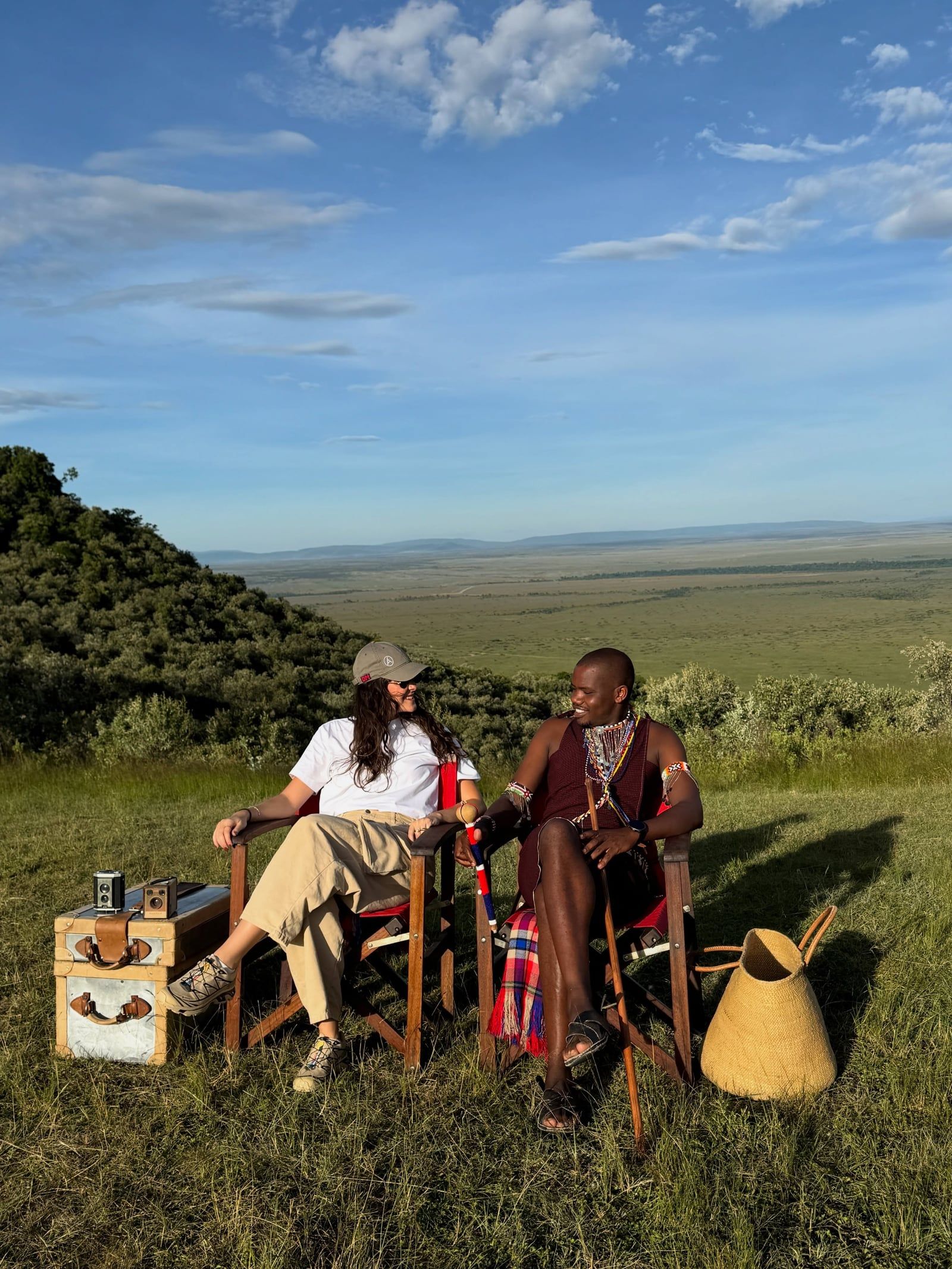
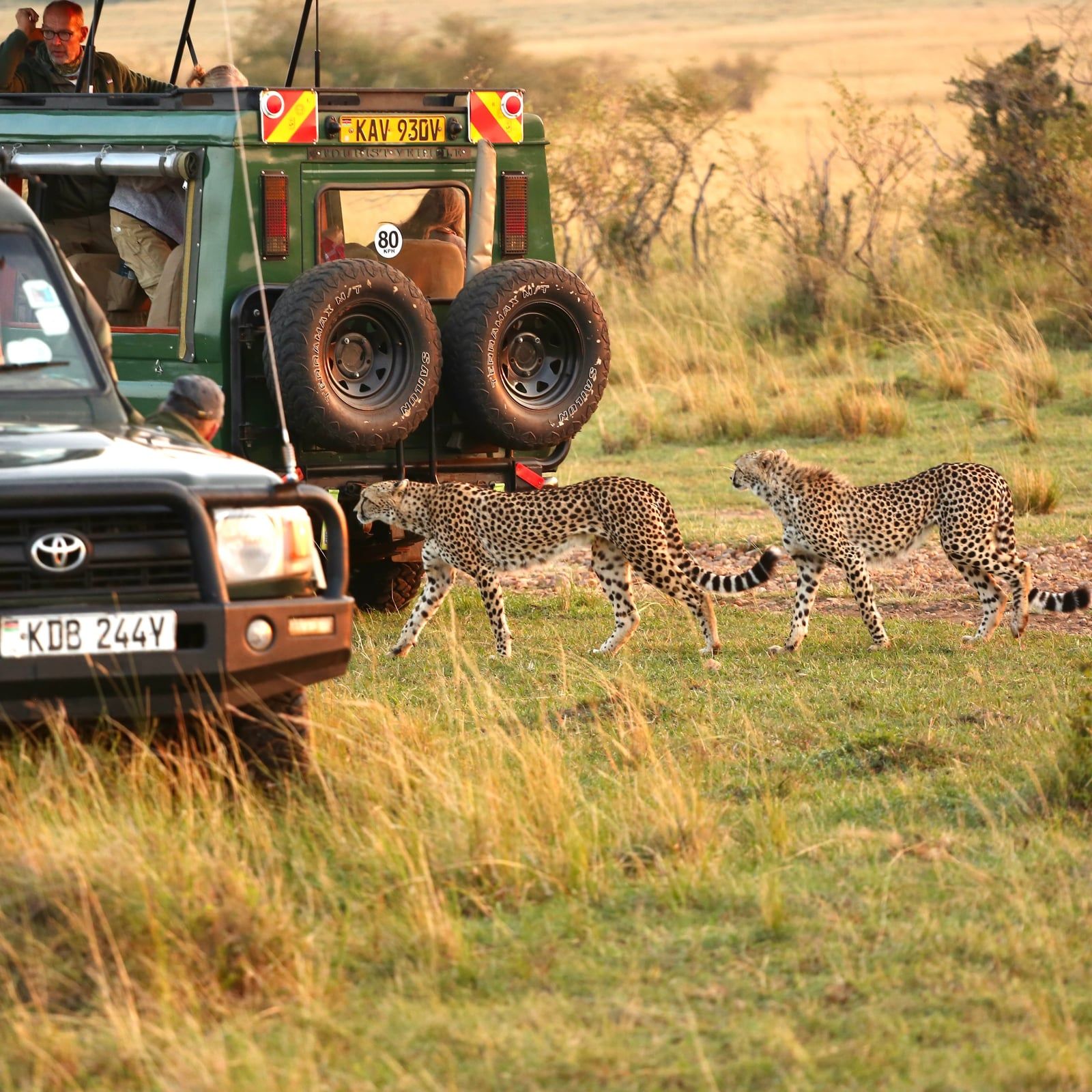
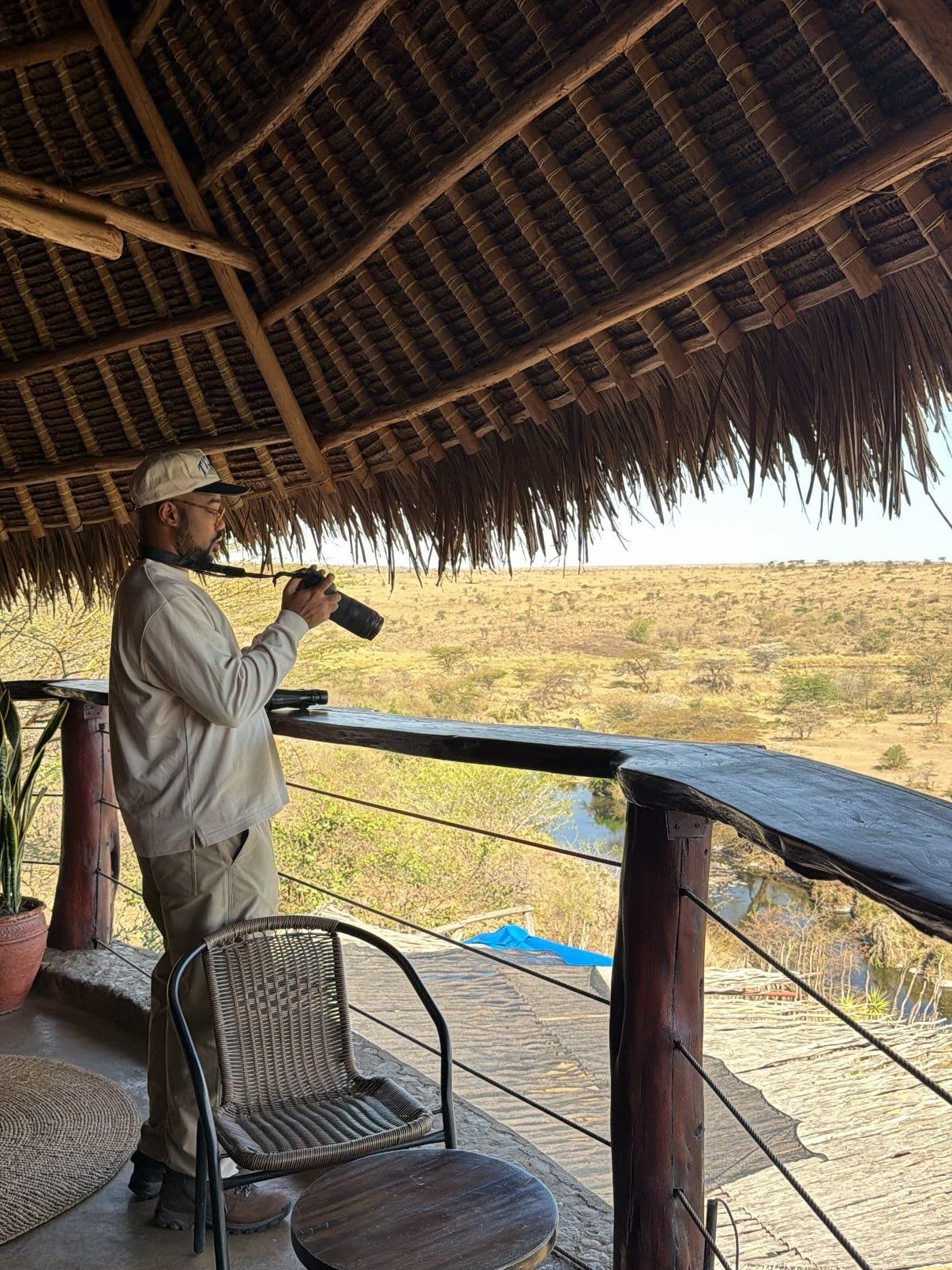
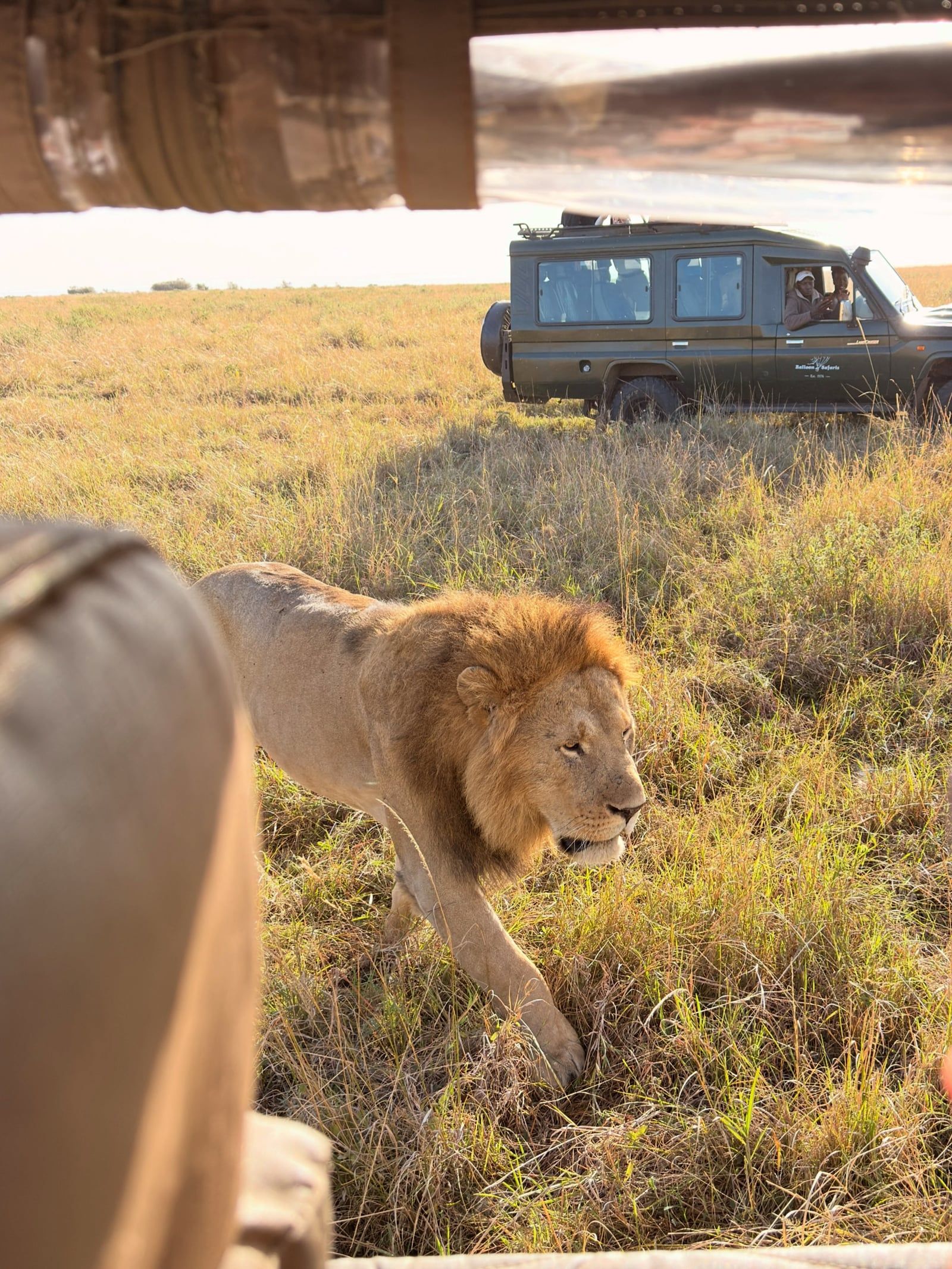
Most tours from Nairobi run 2-6 days and follow the same rhythm: a 5.5-6 hour drive west through the Rift Valley (with a lunch stop at Narok town), then dawn-to-midday game drives across 1,510 km² of open savannah. What you're coming for is the wildlife density — close to 90 mammal species, the Big Five, and between July and October the 1.3-1.5 million wildebeest of the Great Migration.
From mid-July the wildebeest herds arrive from the Serengeti and pile into the Mara River, where crocodiles wait. Crossings peak in August-September near the Purungat Bridge area. Expect crowds of vehicles — when more than five gather, viewing is capped at 10 minutes.
The grassland around Musiara, Talek and Sekenani sectors delivers near-guaranteed lion, leopard and cheetah sightings on early drives, since gates open at 6 AM and predators hunt in the cool hours. Guides radio each other, so news of a kill travels fast.
Lift off before sunrise for a 1-1.5 hour drift over the herds, then land to a champagne bush breakfast — about 4-5 hours all in. It costs roughly US$450-600 per person and cancels in wind or heavy rain, so book it for early in your stay in case it's retried the next morning.
The northwest sector beneath the Oloololo Escarpment sees far fewer vehicles than the Narok-run side and has the best-maintained tracks. Its two gates (Purungat Bridge and Oloololo) are cashless only — Visa, Mastercard or M-Pesa.
Many tours add a guided village stop near the gates, typically US$30-50 per person, with songs, jumping dances and beadwork. This is the culture that named the reserve — 'Mara' means 'spotted' in Maa, for the acacia-dotted plains. Always ask before photographing anyone.
A full day between the Talek and Mara rivers, with a packed bush breakfast or lunch, lets you follow wildebeest columns and resident elephant and buffalo herds without racing back to camp. It's the standard day-two format on 3-day tours.
Tour prices from Nairobi start around US$195, but the gate fee is a separate cost on many departures — check the fine print before comparing. A few practical points will save you money and headaches.
Most 3-day budget tours (from US$195) exclude entry fees, which run US$100 per adult per day Jan-Jun and US$200 from July-Dec. For a 3-day trip that's about US$200 (Jan-Jun) or US$400 (Jul-Dec) extra. The 4-Day Mara-Nakuru jeep safari at US$1,300 and the 3-Day reserve tour at US$550 include all park fees in the price — do the math before assuming the cheapest option wins.
July-October doubles the entry fee and the best camps fill months ahead — book 6-12 months out for August-September. December-February gives you similar resident wildlife at US$100/day and a fraction of the crowds. Day tours and budget safaris run daily year-round and rarely sell out.
Nairobi day tours cost US$225-230 and run 10-15 hours with a 4-5 AM pickup — you spend up to 12 of those hours on the road for maybe 3-4 hours in the reserve. Fly-in day trips (45-60 minutes each way) make single days feasible. If you can spare two nights, do that instead.
Most Nairobi tours offer a full refund if you cancel at least 24 hours ahead. The 6-day multi-park safaris are stricter: full refund only 6+ days out, 50% between 2 and 6 days, nothing inside 48 hours. Check which policy your tour carries before paying.
Budget departures put up to 6-7 travelers in a 4x4 Land Cruiser with a pop-up roof; the 6-day Kenya circuit uses a shared safari van, which is cheaper but rougher. Private 2-day tours (US$450) get your own vehicle with pickup from homes and apartments, not just hotel lobbies.
Some itineraries can route through private conservancies like Mara North, Naboisho or Ol Kinyei (US$80-120 per adult), where night drives, walking safaris and off-road tracking are allowed — all forbidden inside the main reserve. Ask whether your tour stays in the public reserve only.
Several tours list wheelchair-accessible transport, including the 3-day safari at US$370 and the cultural Interactive Safari at US$750. Since all wildlife viewing happens from the vehicle, the Mara adapts well — book through an accessible-safari operator for ramp-fitted 4x4s and accessible camps.
Swipe to see more
| Budget Group Safari (3 days) | Day Trip from Nairobi | Small-Group Lodge Safari (4 days) | Private Short Safari (2 days) | Multi-Park Kenya Circuit (6 days) | |
|---|---|---|---|---|---|
| Duration | 3 days / 2 nights | 10-15 hours | 4 days / 3 nights | 2 days / 1 night | 6 days / 5 nights |
| Price from | US$195 per adult | US$225-230 per adult | US$1,300 per adult | US$450 per adult | US$580 per adult |
| Best for | First-time safari travelers and tight budgets — guaranteed daily departures even with one booking, shared 4x4 Land Cruiser with up to 7 travelers | Travelers with only one spare day in Nairobi; 4-5 AM pickup, about 3-4 hours of game driving, back in the city by 7 PM | Wildlife photographers and comfort travelers — max 6 passengers, Mara plus Lake Nakuru's rhinos and flamingos, daily game drives in both parks | Couples and families who want their own vehicle — door-to-door pickup from homes and apartments, set your own pace | Travelers covering Kenya in one trip — Mara, Lake Nakuru, Lake Naivasha and Amboseli in a shared pop-up-roof van |
| Park fees included? | No — budget roughly US$200 (Jan-Jun) or US$400 (Jul-Dec) per person, or pick the 'with park entrance fees' option | No — entry (US$100-200) is paid separately at the gate | Yes — all park entrance fees and full-board accommodation included | No — listed as 'Other' exclusion; confirm with the operator | Not specified — confirm before booking; cancellation is strict (full refund only 6+ days out) |
Swipe to see more
All five open gates — Sekenani, Talek, Oloolaimutia, Musiara and Oloololo — run on the same clock: 6:00 AM to 6:00 PM, daily, year-round. Sand River Gate is currently closed.
Tickets are valid for 12 hours (6 AM-6 PM). Since 1 July 2023, guests staying outside the reserve pay a daily fee per daylight entry — there's no overnight ticket that covers the next morning.
Tours handle this for you, which is one quiet argument for booking one: the 4 AM and 5 AM Nairobi pickups exist precisely to get you inside the reserve by mid-morning.
Nairobi is the gateway, 225-275 km away depending on which gate you use.
By road (most tours): 5.5-6.5 hours via Narok town, tarred all the way to Sekenani Gate. Allow the longer end for Musiara and Oloololo gates. Tours typically stop at Narok — the biggest Maasai town — for lunch.
By air: 45-60 minutes from Nairobi Wilson Airport on Airkenya, Safarilink, Mombasa Air Safari or Fly ALS, landing at Keekorok, Mara Serena, Musiara, Olkiombo, Olare, Kichwa Tembo, Ngerende or Siana airstrips. Roughly US$150-250 one-way. Strict 15 kg baggage limit in soft-sided bags only, check in 60 minutes early.
Budget option: bus from Nairobi CBD to Narok (KES 900-1,300 total one-way, 6-8 hours door to gate), then the 'Talek Express' matatu to Sekenani Gate. Matatus stop running around 1 PM, so leave Nairobi early.
Self-driving? Leave Nairobi by 7 AM and reach the gate before 3 PM so you're at camp in daylight. Gates close at 6 PM sharp.
July to October is the prime window. Migration herds arrive around mid-July, Mara River crossings peak in August-September, and dry weather concentrates wildlife at permanent water. The costs: US$200/day entry, the highest visitor numbers, and camps booked 6-12 months ahead.
December-February is the smart alternative — dry, quiet, US$100/day, and resident lions, leopards, cheetahs and elephants don't leave. If the migration isn't your sole goal, this is when to come.
Avoid April and May if you can. Long rains turn the murram roads to mud, 4x4s become mandatory, photography light is poor, and some camps close. Rates are at their cheapest and the plains are at their greenest — that's the whole trade. November's short rains bring milder versions of the same problems; March can turn wet too.
Timing the migration is never exact: the animals follow the rains, not a calendar, so river crossings in any given week are a gamble even in September.
The reserve itself isn't built for wheelchairs — tracks are rough and there are no paved accessible trails. But game drives adapt well, because all wildlife viewing happens from the vehicle.
Accommodation inside and around the reserve runs from public campsites to full-board lodges. Budget tours use tented camps with real beds, en-suite toilets and hot water inside the tent, a shared lounge-dining area, and electricity for charging phones — that's the US$195-370 tier. Lodge-based tours (US$550 and up) put you behind walls with full board.
One gap to know: night game drives are not available inside the main reserve. For those you need a conservancy.
Stay in your vehicle around wildlife — elephants, buffalo, lions and hippos kill people who don't. Exit only at designated points, keep voices low, and give hunts and river crossings generous distance. Animal harassment draws a KES 10,000 fine.
Often not. The 3-day budget safaris from US$195 exclude entry fees, which run US$100 per adult per day (Jan-Jun) or US$200 (Jul-Dec) — about US$200-400 extra per person on a 3-day trip, unless you pick the 'with park fees' option. The 4-Day Mara-Nakuru jeep safari (US$1,300) and the 3-Day reserve tour (US$550) include all entrance fees. Compare the all-in totals, not the sticker price.
It's doable but rushed. Tours cost US$225-230, pick you up between 4 and 5 AM, and involve 5.5-6 hours of driving each way for roughly 3-4 hours inside the reserve, returning by 7 PM. Fly-in day trips cut the drive to 45-60 minutes each way and make the single-day format far more workable. If you can spare two nights, book a 2-3 day tour instead — you'll get dawn drives, when the cats are actually hunting.
Plan on 3-4 days. The classic format is 4 days/3 nights, giving you four to six game drives across the main sectors — which is exactly what the popular 3-day tours deliver, with day two spent fully inside the reserve. Wildlife-focused travelers often extend to a week, splitting nights between the main reserve and a conservancy like Mara North or Naboisho.
Book 6-12 months ahead for July-September. Herds typically arrive mid-July and Mara River crossings peak in August-September, but the best camps fill far in advance and the entry fee doubles to US$200/day in that window. If your dates are flexible, December-February offers similar resident wildlife at half the entry cost and a fraction of the crowds.
Early. Day trips pick up between 4:00 and 5:00 AM from your hotel, residence or the airport, stopping for breakfast or coffee on the way and reaching the reserve by mid-morning. Multi-day tours usually leave around 7-8 AM with a lunch stop at Narok town. Balloon flights start even earlier — pre-sunrise lift-off — so expect a 4 AM wake-up call at camp.
Most Nairobi day trips and 3-day safaris give a full refund if you cancel at least 24 hours before departure. The longer multi-park circuits are stricter: the 6-day safari only refunds in full if you cancel 6 or more days out, drops to 50% between 2 and 6 days, and pays nothing inside 48 hours. Read your specific tour's policy before paying, especially for high season.
Yes, usually as an add-on. Flights cost roughly US$450-600 per person for 1-1.5 hours in the air plus a champagne bush breakfast after landing (about 4-5 hours total). Book 1-2 days ahead and schedule it early in your stay, because flights cancel in wind or heavy rain and operators typically retry the following morning. The US$50 landing fee is normally included in the price.
Several are. At least three tours on the typical Nairobi list — including the 3-day safari at US$370 and the cultural Interactive Safari at US$750 — offer wheelchair-accessible transport. Since all wildlife viewing happens from the vehicle, the format works well; specialized 4x4s with ramps can be arranged through accessible-safari operators, and some camps like Karen Blixen Camp have accessible rooms. Book well in advance.
Yes — children of all ages are welcome, and under-8s enter the reserve free (ages 9-17 pay US$50/day). A private vehicle lets your family set its own pace and return to camp early. Request child car seats in advance since they're rarely standard, keep drives to 3-4 hours for young kids, and sort malaria prevention with a doctor 4-6 weeks before travel. Note that some conservancy camps set minimum-age policies.
The main reserve (US$100-200/day) is where the migration river crossings happen, but it forbids night drives, walking safaris and off-road tracking. Bordering conservancies like Mara North, Naboisho, Olare Motorogi and Ol Kinyei (US$80-120/day) allow all three, with far fewer vehicles and strong leopard and cheetah densities. The best itineraries split nights between the two — 2-3 in the reserve, 1-2 in a conservancy.
Browse verified tours with free cancellation and instant confirmation.
Find Tours


A 3-day budget safari that departs Nairobi daily, guaranteed — even with a single booking — because the operator owns both the vehicles and the camps. You join up to 6 other travelers in a customized 4x4 Land Cruiser rather than a large truck, which allows offroad driving and better positioning for photos. Accommodation is in ensuite tents with a toilet, bathroom, bed, linen, and mosquito nets. Hot water and electricity are available for charging phones and cameras. Pickup is free from the airport, or from any hotel or residence within Nairobi CBD; apartments, villas, and homestays inside the pickup radius are also covered. If your accommodation falls outside the radius, contact the operator to arrange an alternative. Meals (breakfast, lunch, dinner), bottled water, and an English-speaking guide/driver are included. Park entrance fees and gratuities are not — entrance fees depend on the option you select. Cancel at least 24 hours before departure for a full refund.
For a full refund, cancel at least 24 hours before the scheduled departure time.
English


This three-day trip leaves Nairobi in the morning and drives down to the Rift Valley floor toward Masai Mara, stopping for lunch at Narok, the biggest Maasai town. Day two is the core of the tour: a full day (about 24 hours on site across the itinerary) in the reserve with the best odds of the trip for Big Five sightings. Day three runs from breakfast back to Nairobi, arriving around 17:00, with an optional Maasai village visit and a stop at the Maasai Market before drop-off at your accommodation. You travel in a 4x4 safari Land Cruiser with a pop-up roof for viewing, with a professional English-speaking driver-guide and mineral water supplied. Accommodation is on full board, so meals at the lodge are covered. Park entry fees are extra — roughly 400 USD per person from July to December, cheaper January to June — so check which season you're booking in. Cancel at least 24 hours before departure for a full refund.
For a full refund, cancel at least 24 hours before the scheduled departure time.
English


A 4-day jeep safari from Nairobi that pairs Masai Mara with Lake Nakuru, run as a small-group trip with a maximum of 6 passengers. You get daily game drives in both parks, plus Mara River stops where hippos and crocodiles gather on the banks. Lake Nakuru is the flamingo and white rhino half of the trip. It's all-inclusive on the road: transport in a modified safari vehicle, all park entrance fees, and full-board accommodation in whichever option you pick at booking. The lodging comes with a big bed, linen, towels, and an en-suite toilet and bathroom. Hot water and electricity run on a schedule, so time your shower accordingly. Free pickup and drop-off covers any location within 10 km of Nairobi Central, including city hotels and both airports. Beyond that radius, pickup costs 20 USD, payable on arrival. The guide speaks English, and you can cancel for a full refund up to 24 hours before departure.
For a full refund, cancel at least 24 hours before the scheduled departure time.
English


This is the shortest realistic Mara option from Nairobi: a 12-hour day that starts with a 4:00 am pickup from your Nairobi hotel, residence, or the airport. From there you drive west through the Great Rift Valley, with a stop along the way for coffee, before reaching the reserve for a game drive. You travel in a private 4x4 Landcruiser jeep with an English-speaking driver, and bottled water is provided. Pickup and drop-off anywhere within Nairobi city are included, as are driver and fuel. The vehicle is yours alone, so the game drive pace is set by you and your driver rather than a group. Be at your hotel reception at the agreed pickup time — the schedule leaves little slack. Anything beyond the listed inclusions (park fees, meals, extras) is not covered. Cancel at least 24 hours before departure for a full refund.
For a full refund, cancel at least 24 hours before the scheduled departure time.
English


Six days in a shared safari van with a pop-up roof, running from Masai Mara through Lake Nakuru and Lake Naivasha to Amboseli. An English-speaking professional guide drives and accompanies the group throughout. The van's pop-up roof is what you'll be standing under for most game viewing. Meals are covered: breakfast, lunch and dinner each day, plus drinking water. Five nights of accommodation are included, so lodging for the whole trip is sorted before you arrive. Anything beyond that list is on you. Cancellation terms: a full refund if you cancel at least 6 full days before departure, partial refund between 2 and 6 days out. Since the van is shared, expect the pace to follow the group schedule rather than your own.
If you cancel at least 6 full day(s) before the scheduled departure time, you will receive a full refund.<br>If you cancel between 2 and 6 day(s) before the scheduled departure time, you will receive a 50% refund.<br>If you cancel within 2 day(s) of the scheduled departure, you will receive a 0% refund.
English


A 5:00am pickup from your Nairobi hotel, apartment or villa starts this 15-hour day trip, which runs in a private air-conditioned vehicle to the reserve. There's a brief breakfast stop at 8am on the way, or you can carry a picnic breakfast instead. The game drive itself uses an open Safari Landcruiser 4x4 with a pop-up roof, driven by a local Maasai guide who was born in the area. Guiding is in English. A picnic lunch is provided, with all dietary provisions catered for, plus bottled mineral water. An optional visit to a Maasai village can be added to learn about local way of life and traditions. Park entry fees are not included. Cancel at least 24 hours before departure for a full refund.
For a full refund, cancel at least 24 hours before the scheduled departure time.
English


This is a 72-hour, three-day safari built around two things: game drives inside the Masai Mara National Reserve and time spent with the Masai community who live there. You'll visit their villages, share meals, and join the dancing — the cultural side is the point of this operator, not an add-on. Game drives run in a specially equipped safari vehicle with a pop-up roof, with a professional English-speaking driver-guide leading them. Accommodation is full board on safari, and mineral water, park and reserve entrance fees are all included in the price. Cancelling six full days or more before departure gets you a full refund; between two and six days out, you get a partial one. Pickup is from any hotel within Nairobi city centre — nowhere else, so if you're staying outside the centre you'll need to arrange your own way in. Guides work in English, German, French, and Spanish; request your language when booking.
If you cancel at least 6 full day(s) before the scheduled departure time, you will receive a full refund.<br>If you cancel between 2 and 6 day(s) before the scheduled departure time, you will receive a 50% refund.<br>If you cancel within 2 day(s) of the scheduled departure, you will receive a 0% refund.
German, English, French, Spanish


This is a 48-hour trip built around private transport: your own vehicle from Nairobi to the reserve and back, with pickup directly from homes and apartments rather than hotel lobbies or meeting points. That door-to-door coverage saves the usual scramble of getting to a central departure spot with an early start. Meals are covered on the road — lunch, dinner, and breakfast are all included, so you're not budgeting for park-adjacent restaurant prices. Guides work in English, German, French, Italian, or Spanish; if you need a specific language, request it when booking rather than assuming it on the day. Cancellation is standard: a full refund if you cancel at least 24 hours before departure. Anything inside that window loses the payment.
For a full refund, cancel at least 24 hours before the scheduled departure time.
German, English, Italian, French, Spanish


This 3-day safari starts with pickup from your Nairobi hotel or airport lobby, then drives west through the Great Rift Valley to a lodge near the reserve. Game drives run across the days in search of the Big Five, with a packed picnic lunch on day two so you can stay out over midday instead of returning to camp. Accommodation, all transport, entrance fees, and every meal (breakfast, lunch, dinner) are included. The only extras are accommodations listed as upgrades and transport marked optional. Guide languages are English, French, Spanish, and Chinese. Cancel at least 24 hours before departure for a full refund.
For a full refund, cancel at least 24 hours before the scheduled departure time.
Chinese, English, French, Spanish


This is a 10-hour day trip built for travelers with limited time: hotel pickup at 5am, return to Nairobi by 7pm. The drive to the Mara takes about four hours, so pack a breakfast and coffee for the road — the driver gives a short safari briefing before you set off. The day includes game drives inside the reserve, a professional English-speaking guide, and a bottle of water. Pickup and drop-off at your hotel are covered. Airport pickup is possible if you provide your flight details when booking. Gratuities are not included. At the hotel, the driver/guide will ask for you by name at reception, so no need to wait outside. Cancel at least 24 hours before departure for a full refund.
For a full refund, cancel at least 24 hours before the scheduled departure time.
English